Ticketmaster
12 min read
Product Builders: Don't Copy Ticketmaster

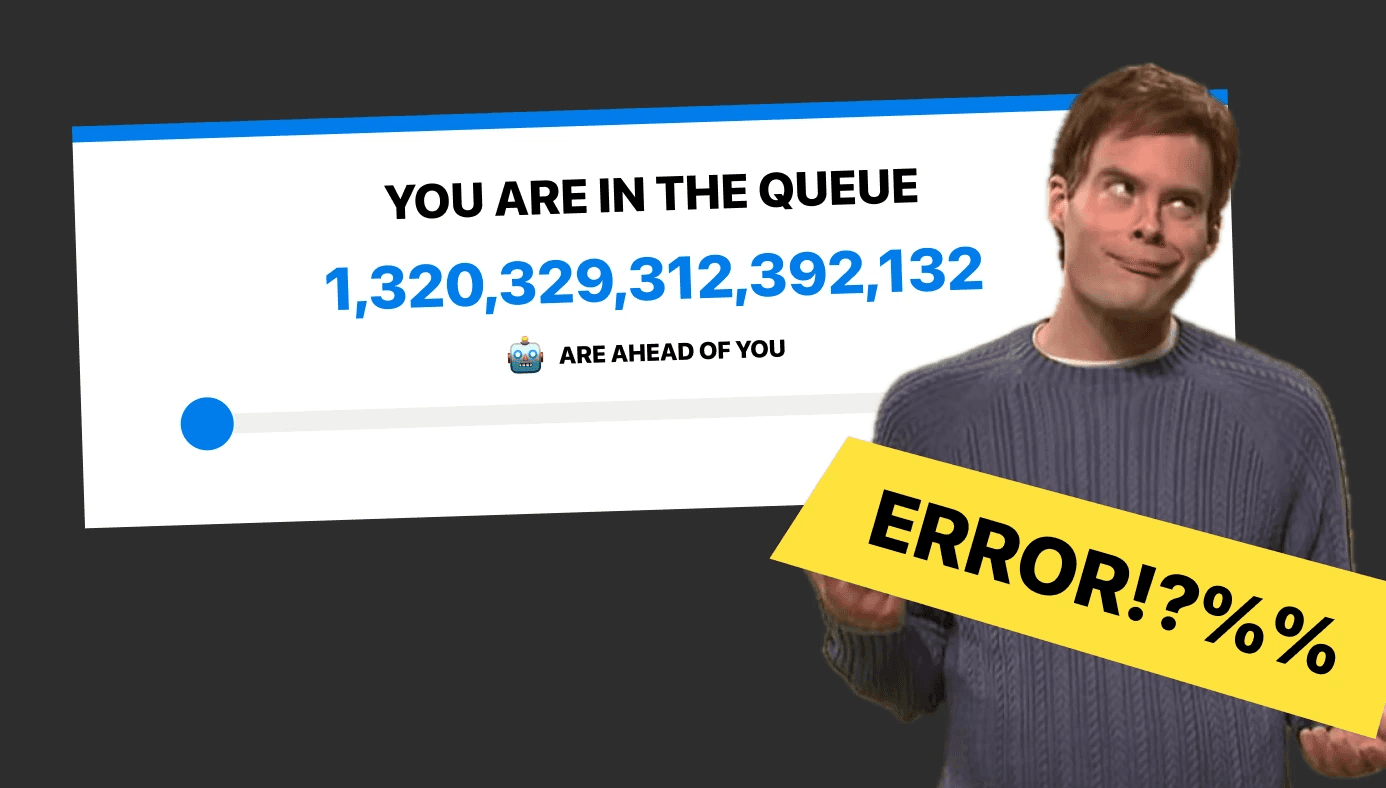
Ticketmaster, who merged with Live Nation in 2010, control more than 70% of the ticketing market. In short; they’re a monopoly.
And they’re often accused of abusing their power with high fees, dynamic pricing, being slow to react to bots and scalpers, and providing a service that routinely crashes during popular releases.
But let's ignore all of that, and go one level deeper.
Ticketmaster, as it stands today, is an experience where:
🤖The onboarding is optimised for data collection
👊The checkout punishes cautious consumers
🐞The core product is ripe with errors
And yet, their analytics likely hide all of this, behind (presumably) strong attempted-conversion rates and low churn.
If you're building a product, this will help you understand what not to do as you grow.
Case study
Key UX takeaways
1. Front-loading permissions
When you stop and think about it, it's weird that even the most popular apps in the world front-load their experiences with multiple requests for your data.
This is true, despite the universal understanding that consumers tend to hate it.
It's a form of 🙅♀️ Cognitive Dissonance that has become so common, we've stopped noticing it.
For example, before you can even browse any events on the Ticketmaster App, you need to navigate through all of the following requests:
Sharing data across other companies and apps
Accepting Ticketmaster's privacy notice
Onboarding welcome screens
Notification permissions
Location tracking permissions
Often when I challenge companies on this, they'll claim that "it allows us to deliver the best experience to the user, once they're using the app", before conceding.
There are exceptions, where permissions can meaningfully impact the value proposition (i.e., an app to track you cycling outdoors would be severely hindered without location data), but these are exceptions to the rule.
It feels like an under-utilised UX hack: the better experience is to ask for permission in context of a clear benefit.
Instead of asking the user for everything right away, wait until you can demonstrate a clear value for that 'thing'. Wait for the 'why?' to be obvious.
⚡️Notifications
If the user lands on a sold out event, offer to notify them if any tickets become available.
🗺Location sharing
If the user searches for a new location, offer to always and automatically show nearby events.
As a super rough demonstration, something like this could work:
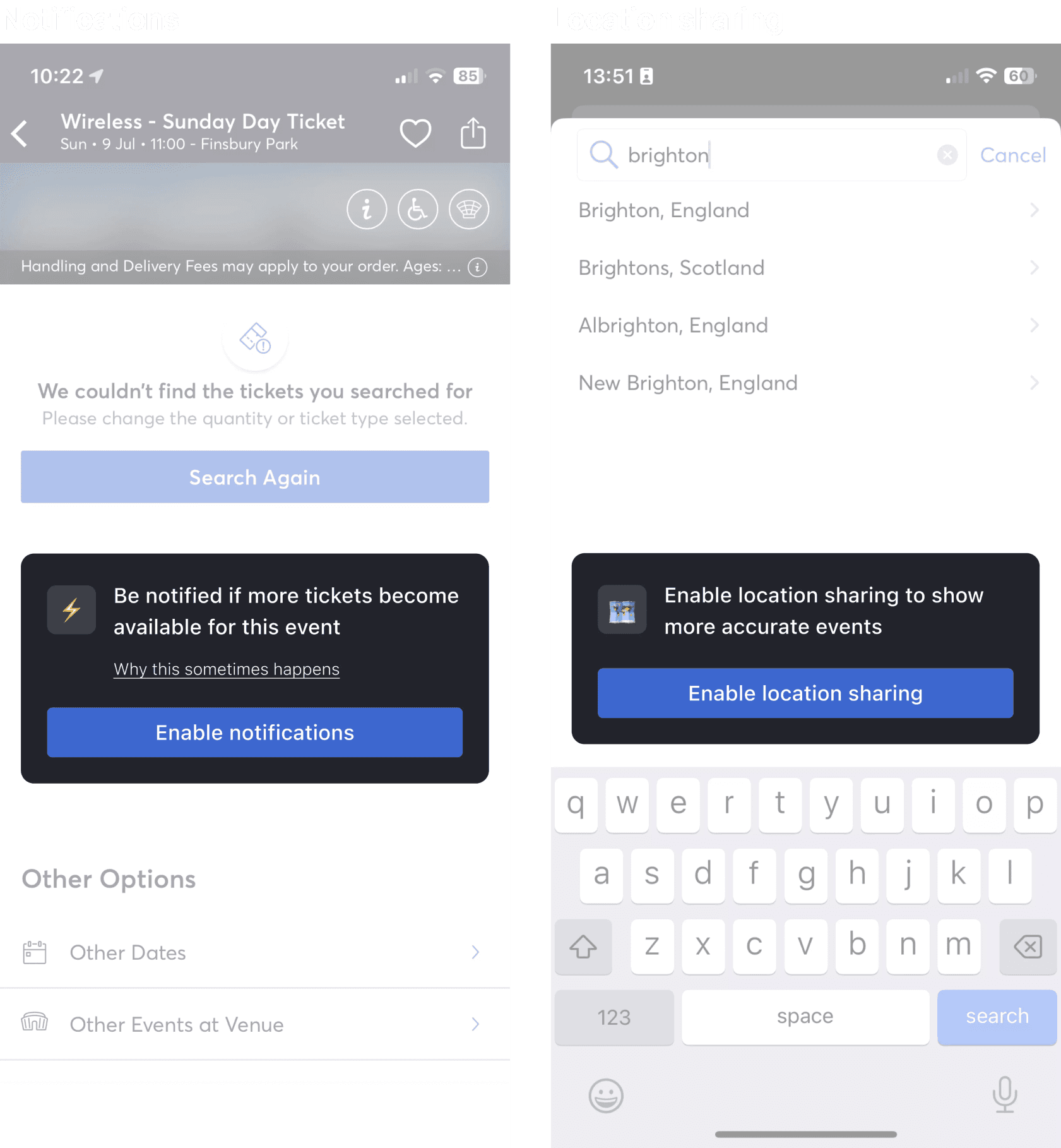
To be clear, it's not necessarily about improving the number of people who opt-in, but rather giving people an informed choice, where they don't feel pestered.
It can feel like a hack, because it quickly reduces friction in the onboarding.
2. Second-order effects
Product builders; please don't copy Ticketmaster—there's a real possibility that even they don't know how bad this experience is.
Or rather; they could be looking at the data, and concluding that everything is great.
This is because Ticketmaster has an unusual dynamic: popular tickets are released with plenty of promotion, far more demand than will ever be satisfied, and people are desperate.
In other words; they will put up with just about anything.
For example, imagine that you're scrambling to secure tickets to this theatre show, do you even stop to register how awkward it is to tap the seats that you want?
Or are you operating on pure autonomy and panic?
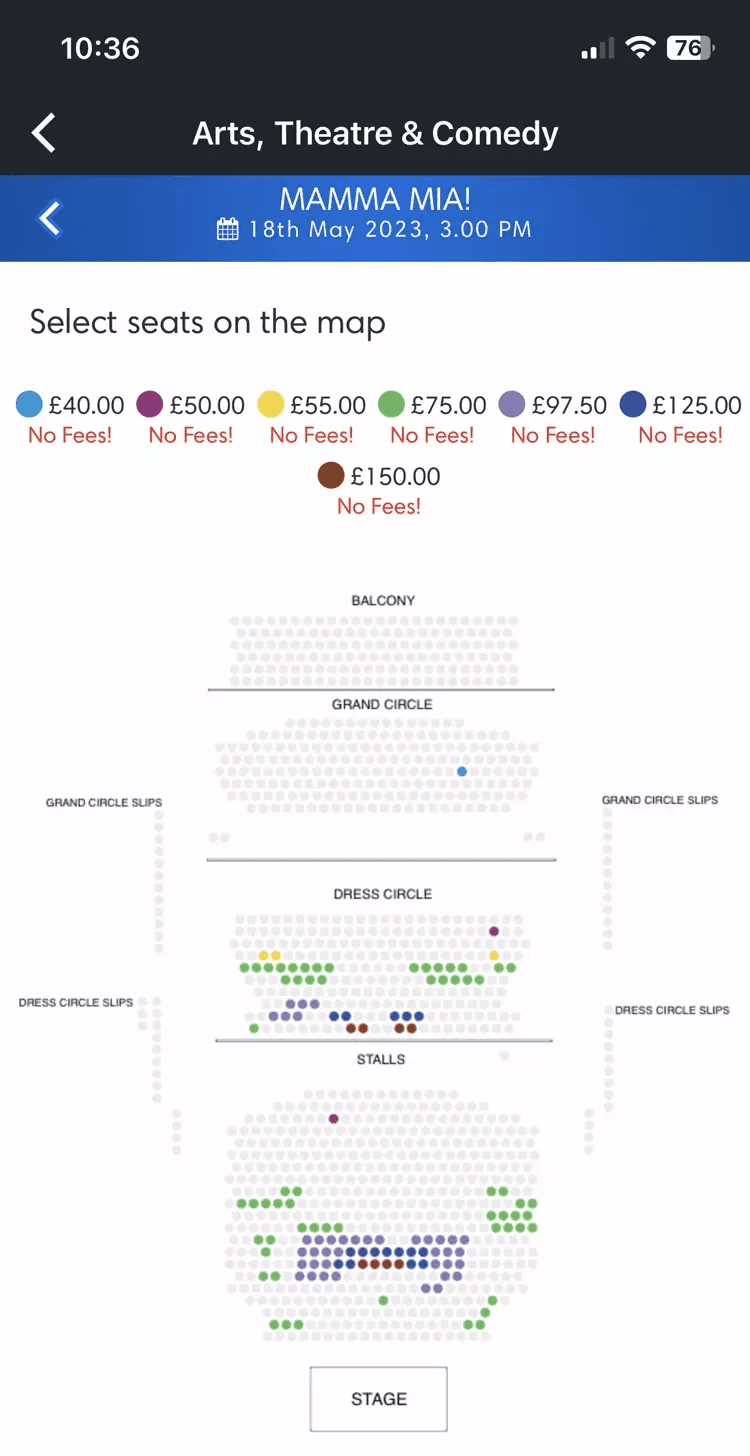
This one factor alone warps a typical user's behaviour, and will skew almost all of the checkout analytics that they collect.
If companies insist on operating solely on data-driven decisions, they'll miss even the most obvious annoyances.
And as a second-order effect, if you assume that Ticketmaster's success is in part due to their design, (or at least not hindered by it), then you'll be missing the point too.
3. Fail with grace
14 million people (including bots) tried to purchase Taylor Swift tickets on their release. The catch; there were only 2.4 million for sale.
In a post-mortem of the crash, Ticketmaster claimed that they’ve received 3.5 billion system requests, and published the following graphic.
I expect that the problem was exacerbated by people panic-refreshing multiple devices.
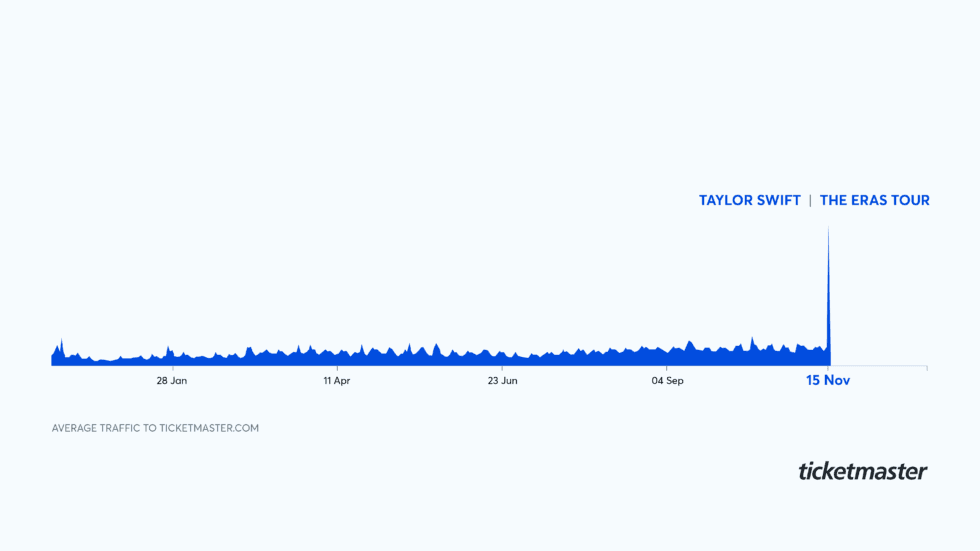
Individual services (both internal and external APIs) start to slow, and then stop.
For example, their postcode lookup service died, stopping people from validating their addresses, which therefore lost them their tickets.
But if we ignore these intense 'unprecedented demand' moments (where bugs are supersized), I still quickly found repeatable steps that crashed more or less every time.
For example; finding a ticket, cancelling the order, and going back in the browser.
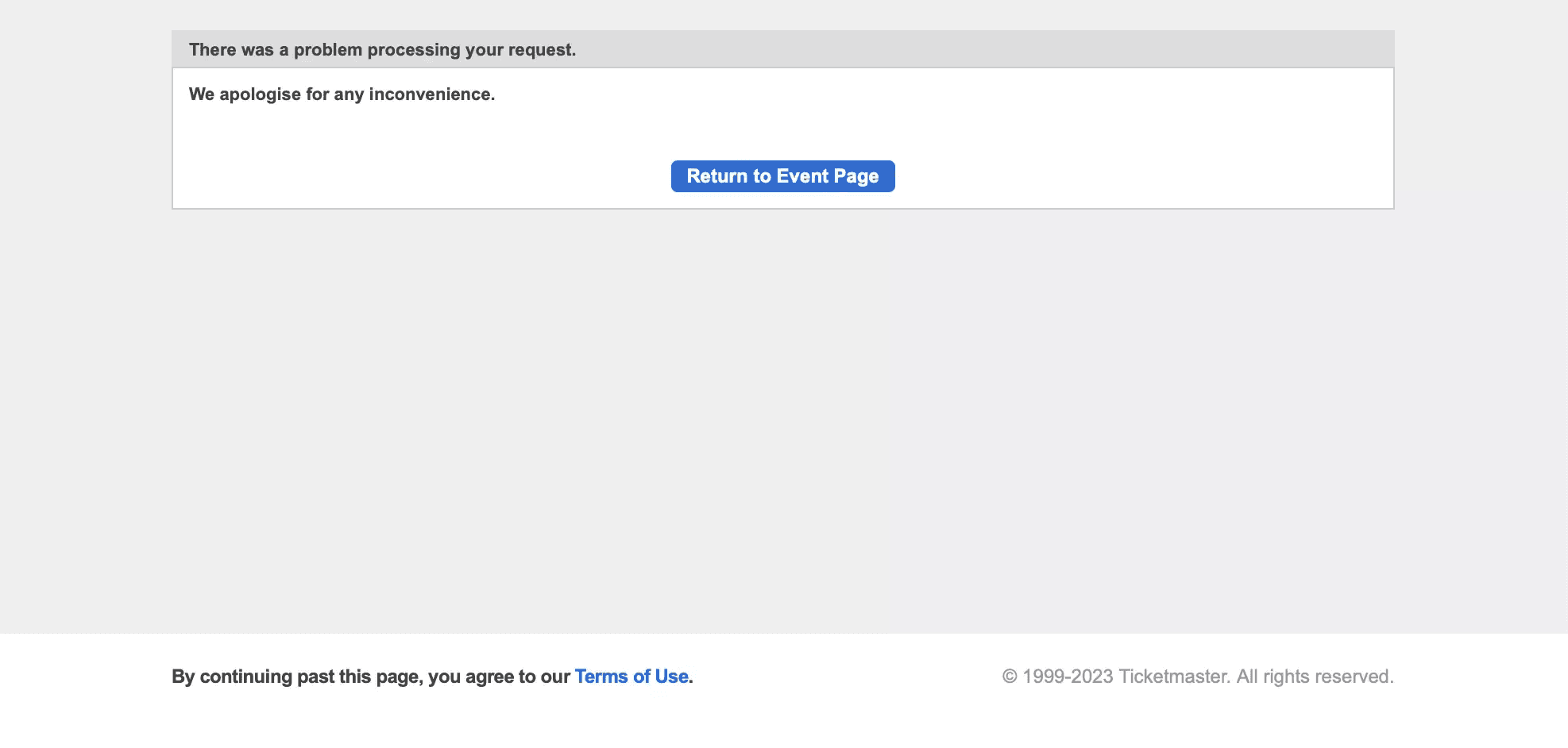
I can be even more reductive, by using one of the most common errors: the 404.
My non-technical summary is that a 404 error refers to a missing piece of content. For example, an old case study that you still have the link for, but has since been removed.
Internet companies have learned that a well-designed 404 error is a 'catch-all' for missing content, and the small amount of effort required to create a helpful one, demonstrates empathy and attention to detail.
Compare Ticketmaster's to Airbnb's below:
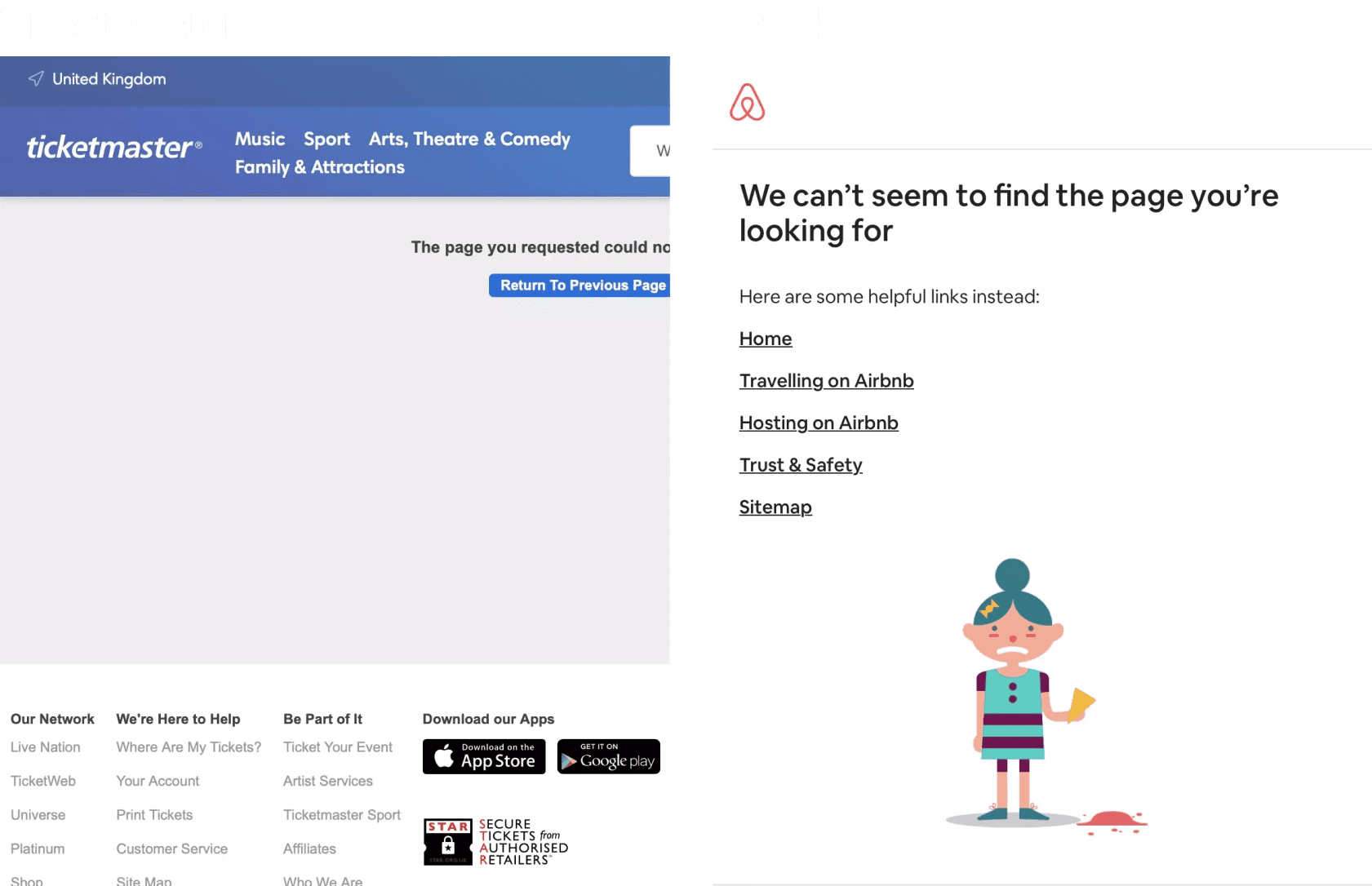
Ticketmaster's 404, which you can hit by going here, is a non-responsive page that was probably never signed-off by a designer. Functionally it's flawed too, as the 'return to previous page' CTA won't even work for new sessions (because there's no previous page to return to).
It's not the worst part of their user experience, but it is an indication that the 20 billion dollar company has their eye off the ball.





" height="15.714187334136962px" id="ta6fHHMhV" transform="translate(0 2.75)" width="22px"/></g></svg>)
" height="22px" id="qqsnXVfDT" transform="translate(2.75 4)" width="17px"/></g></svg>)
" height="22.00003095067357px" id="d8dLzF7CH" transform="translate(0 0)" width="22.000293766102647px"/></g></svg>)
" transform="translate(2 5)" width="8px"/></svg>)

" height="22px" id="GHRWN_Lxj" width="22px"/></svg>)
" width="20px"><path d="M 9.684 0 C 9.722 0 9.752 0.011 9.772 0.024 C 9.787 0.034 9.808 0.052 9.823 0.097 L 11.682 5.586 C 11.897 6.217 12.511 6.644 13.202 6.644 L 19.223 6.644 C 19.272 6.644 19.296 6.656 19.311 6.668 C 19.36 6.707 19.38 6.769 19.364 6.827 C 19.359 6.843 19.348 6.867 19.308 6.895 L 14.437 10.289 C 13.877 10.678 13.643 11.369 13.857 12 L 15.718 17.487 C 15.733 17.533 15.727 17.56 15.721 17.577 C 15.709 17.604 15.69 17.628 15.665 17.645 C 15.64 17.663 15.611 17.673 15.58 17.675 C 15.548 17.674 15.518 17.664 15.494 17.645 L 10.623 14.252 C 10.064 13.862 9.306 13.862 8.746 14.252 L 3.874 17.646 C 3.851 17.665 3.821 17.676 3.79 17.676 C 3.759 17.674 3.729 17.664 3.704 17.646 C 3.679 17.629 3.659 17.605 3.648 17.578 C 3.641 17.561 3.636 17.535 3.651 17.49 L 5.512 12.002 C 5.726 11.371 5.492 10.68 4.932 10.29 L 0.062 6.895 C 0.022 6.867 0.01 6.843 0.005 6.827 C -0.003 6.798 -0.002 6.768 0.009 6.739 C 0.018 6.711 0.035 6.686 0.059 6.667 C 0.085 6.65 0.115 6.642 0.146 6.644 L 6.167 6.644 C 6.859 6.644 7.473 6.217 7.686 5.586 L 9.547 0.097 C 9.562 0.052 9.582 0.034 9.597 0.024 C 9.623 0.008 9.654 -0.001 9.685 0 Z" fill="transparent" height="17.675943321433873px" id="bUPtjzpG3" stroke-dasharray="" stroke-linecap="butt" stroke-linejoin="miter" stroke-miterlimit="10" stroke-width="1.32" stroke="rgb(255, 168, 55)" transform="translate(0.63 0.604)" width="19.369611311791196px"/><path d="M 9.561 0.577 C 9.824 -0.199 10.973 -0.19 11.223 0.589 L 12.608 4.904 C 12.633 4.984 12.646 5.067 12.646 5.151 L 12.646 15.359 C 12.646 15.426 12.661 15.495 12.689 15.558 C 12.903 16.033 12.321 16.471 11.891 16.159 L 10.914 15.452 C 10.616 15.236 10.206 15.232 9.904 15.442 L 5.03 18.837 C 4.346 19.312 3.428 18.673 3.689 17.903 L 5.549 12.414 C 5.667 12.07 5.539 11.693 5.234 11.48 L 0.361 8.088 C -0.322 7.613 0.029 6.577 0.873 6.577 L 6.894 6.577 C 7.272 6.577 7.606 6.344 7.723 6 L 9.56 0.577 Z" fill="rgb(255, 168, 55)" height="19px" id="Zy4wQPk0p" width="12.734743290247948px"/></g></svg>)